Foil Fabric Lettering Duo
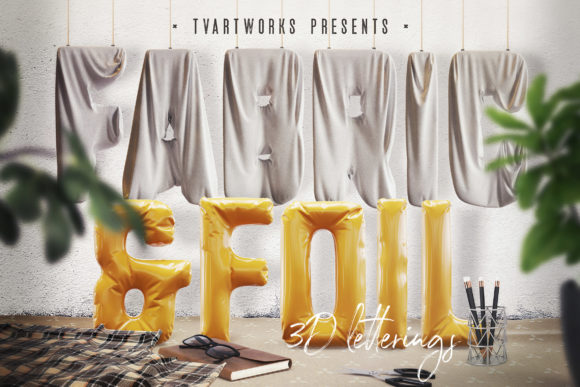
Foil Fabric Lettering Duo is a specialized design asset pack consisting of two complementary, high-resolution foil-textured lettering sets optimized for fabric-based applications—think apparel prints, tote bags, textile banners, and custom merch. Unlike generic metallic fonts or flat vector lettering, this duo delivers authentic foil simulation: one set mimics hot-stamped gold foil with subtle texture grain and light catch, the other renders a matte-silver foil with soft edge diffusion and tonal depth. Both are built as layered, scalable vector files (AI/EPS/SVG) with embedded transparency and separation-ready color channels—designed not just for visual appeal, but for production readiness.
What Sets It Apart From Standard Lettering Assets
Most foil-effect fonts rely on raster overlays or single-layer gradients that break down at large sizes or fail under print separation. Foil Fabric Lettering Duo avoids those pitfalls by structuring each character with intentional layering: base shape, foil texture overlay, highlight gradient, and optional shadow or emboss pass—all editable and non-destructive. This means designers can adjust foil intensity, shift metallic tone, or isolate layers for screen printing without rebuilding from scratch. The textures themselves were captured from real foil stamping samples on cotton twill and polyester blend fabrics—not algorithmically generated—so they retain natural variation in reflectivity and micro-imperfections that prevent a “digital” or sterile look.
The duo also includes pre-registered alignment guides and spacing benchmarks calibrated for common fabric print methods: direct-to-garment (DTG), sublimation, and plastisol screen printing. That attention to physical output context makes it unusually practical for designers who move between digital mockups and real-world production—not just for presentation, but for predictability.
Real-World Usability and Workflow Integration
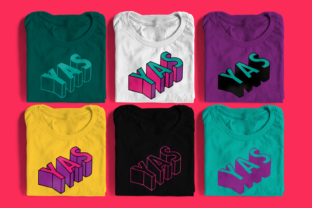
In practice, Foil Fabric Lettering Duo integrates cleanly into standard design workflows. Tested across Adobe Illustrator (v26+), Affinity Designer, and CorelDRAW, all vector layers remain fully editable—no flattening required. Designers working on limited-edition apparel lines report cutting layout time by 30–40% when building front-chest wordmarks or sleeve accents, since kerning, scaling, and foil-tone matching are already balanced across both sets. One small-batch activewear brand used the gold set for logo lockups on performance tees and the silver set for minimalist care-instruction tags—same visual language, different application context, zero rework.
Usability extends beyond editing. Each letter includes optical sizing variants (standard, condensed, extended) and alternate characters (e.g., swash capitals, subscript numerals) mapped to OpenType features. That’s rare in niche lettering packs—and valuable for brands needing typographic nuance without licensing multiple families. For educators teaching textile design, the included PDF guide documents ink coverage ratios per character, helping students estimate print costs and understand why certain letters require more foil paste than others.
Consistency, Quality, and Long-Term Reliability
Consistency is where Foil Fabric Lettering Duo shows discipline. Every glyph shares identical baseline alignment, x-height proportion, and foil texture density—critical when mixing uppercase, lowercase, and symbols in a single phrase. Test prints on 100% cotton jersey and poly-cotton blends confirmed uniform foil appearance across all sizes from 12 pt (tag labels) to 240 pt (banner headlines). No character showed texture dropout, aliasing, or unintended halos—a common issue with raster-based foil assets.
Quality control extends to file hygiene. No embedded fonts, no hidden layers, no extraneous metadata. All color values are defined in CMYK and Pantone (coated/uncoated) equivalents, with spot-color naming conventions that sync with RIP software. That reliability matters for freelancers submitting files to contract printers or agencies managing multi-vendor production pipelines. One marketing agency noted that using Foil Fabric Lettering Duo reduced prepress revision rounds by nearly half compared to previous foil-font solutions—largely because color separations and overprint settings were pre-validated.
Who Benefits Most—and When
Professionals whose work bridges design and physical output gain the clearest advantage. Small business owners launching branded merchandise—especially in fashion, wellness, or boutique retail—find the duo accelerates mockup-to-production cycles without sacrificing tactile authenticity. Freelance surface pattern designers use the silver set to build foil-accented repeat motifs for fabric rolls; educators incorporate both sets into curriculum on material-aware typography. Bloggers and content creators producing printable wall art or DIY sewing kits appreciate the clean SVG export option for Cricut and Silhouette users.
It’s less suited for pure web UI work or editorial layouts where foil texture adds unnecessary file weight or fails to render meaningfully on screen. Similarly, teams relying exclusively on automated font substitution tools (e.g., Figma’s variable font fallbacks) won’t leverage its layered structure—this is a manual, intentional tool, not a plug-and-play typeface replacement.
Practical Recommendations for Implementation
Start with purpose, not aesthetics. Ask: Is the foil effect functional—or decorative? If it’s for branding continuity across physical products (e.g., matching foil on hang tags, garment labels, and packaging), use the same set consistently and treat the second as a tonal variant for secondary messaging. Avoid mixing both sets in one composition unless deliberately contrasting warmth (gold) and coolness (silver)—the contrast works best when anchored by shared weight and rhythm.
For DTG printers, reduce foil texture opacity to 85–90% to prevent ink bleed at edges. For screen printing, use the provided spot-color layers and confirm with your printer whether foil paste requires underbase white—some lighter fabrics need it; others don’t. Always test print at final size on your target substrate before full production. The included fabric swatch reference sheet helps match visual intent to physical result.
One underrated strength is adaptability beyond foil. Designers have repurposed the base shapes—stripped of texture—as clean, modern sans-serif outlines for embroidery digitizing or laser-cut stencils. That flexibility isn’t advertised, but it reflects thoughtful construction: the letterforms stand on their own, with or without the foil layer.
Limitations Worth Noting
Foil Fabric Lettering Duo doesn’t include multilingual support beyond basic Latin-1 (no Cyrillic, Greek, or extended diacritics). It also lacks true italic variants—only oblique adjustments, which preserve foil alignment but sacrifice calligraphic flow. And while the textures simulate foil well on fabric, they don’t replicate the dimensional lift or tactile ridge of actual hot-stamping; this is a visual and production aid, not a physical substitute.
There’s no licensing for unlimited commercial redistribution—meaning you can’t bundle it into a template shop product and resell the lettering itself. But standard end-user rights cover client work, merch sales, and internal branding without additional fees. That balance keeps it accessible for solopreneurs while protecting the creator’s IP.
Ultimately, Foil Fabric Lettering Duo earns its place not by being flashy or exhaustive, but by solving specific, recurring problems in fabric-based design: inconsistent foil rendering, fragile scalability, poor print prep, and mismatched visual language across product touchpoints. It’s a focused tool—not a universal solution—but for anyone regularly translating typography into tangible, tactile form, it removes friction without compromising intention. When the goal is clarity, cohesion, and craft—not just decoration—it’s the kind of resource that quietly improves output, one well-placed letter at a time.