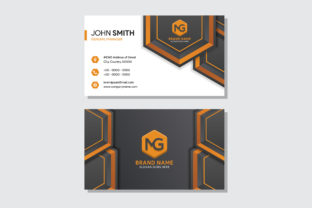
Hexagon Gold Black Business Card
A Hexagon Gold Black Business Card is a premium physical business card distinguished by its non-traditional hexagonal shape, matte or textured black base stock, and metallic gold foil accents—typically applied to typography, borders, or geometric patterns. Unlike standard rectangular cards printed on white or cream paper, this design emphasizes visual contrast, structural uniqueness, and tactile sophistication. It is produced using specialty printing techniques such as foil stamping, die-cutting, and high-gloss or soft-touch laminates, which affect both appearance and durability.
Why Consider a Hexagon Gold Black Business Card?
People explore the Hexagon Gold Black Business Card for reasons tied to identity, industry context, and communication intent. Designers, creative professionals, luxury brand representatives, and entrepreneurs in fashion, architecture, or high-end consulting often seek cards that reflect precision, modernity, and attention to detail. The hexagon shape evokes associations with geometry, efficiency, and natural structure—think honeycombs or molecular lattices—while black and gold convey authority and refinement without overt opulence.
Interest may also stem from practical differentiation: in networking settings where dozens of cards are exchanged, a distinctive shape and finish increases retention and recall. Research in visual cognition suggests that unusual shapes paired with high-contrast color schemes improve short-term memory encoding—making the Hexagon Gold Black Business Card more likely to stand out in a stack or pocket.
Benefits and Realistic Expectations
The primary benefit lies in perceptual impact. When handled, the card’s weight (often 400–450 gsm), precise die-cut edges, and reflective gold foil create a multisensory impression that supports brand positioning. It signals intentionality—not just what someone does, but how thoughtfully they present it.
However, expectations must be grounded. Gold foil does not cover the entire surface; it is applied selectively and may vary in intensity depending on substrate texture and lighting. Matte black stocks can show fingerprints or scuffs more readily than glossy finishes. Also, because the shape deviates from standard dimensions, the Hexagon Gold Black Business Card may not fit seamlessly into all digital scanning apps or traditional business card holders—especially those with rigid internal dividers sized for rectangles.
Production timelines are typically longer than for conventional cards. Die-cutting requires additional prepress setup, and foil stamping demands careful alignment. Rush orders may incur significant surcharges or be unavailable altogether.
Key Considerations Before Choosing
Functionality vs. form. Ask whether the card will primarily serve as a functional contact tool or as a tactile extension of a brand experience. If recipients routinely input details manually—or if your audience includes professionals who rely on automated scanning tools—verify compatibility with common OCR (optical character recognition) software. Some hexagonal layouts place critical information (like phone numbers or URLs) near cut edges, potentially reducing scan accuracy.
Budget alignment. A Hexagon Gold Black Business Card generally costs 2–4× more per unit than a standard 3.5" × 2" card. Price differences stem from specialized equipment use, lower press run efficiency, and higher material waste during die-cutting. For early-stage businesses or those ordering under 100 units, unit cost may outweigh perceived value unless the card directly supports a high-touch sales process.
Design constraints. Not all fonts render well in foil, especially thin or highly decorative typefaces at small sizes. Gold foil also has limited legibility on dark substrates when used for fine lines or low-contrast elements. Designers must balance aesthetic ambition with readability—particularly for essential fields like email addresses or website URLs.
When This Card Is a Strong Fit
The Hexagon Gold Black Business Card aligns well when three conditions converge: first, the professional context rewards distinctiveness—such as art direction, boutique architecture firms, or independent perfumers launching a signature line. Second, the target audience values craftsmanship and engages with physical media (e.g., gallery owners, collectors, or editorial contacts). Third, the card complements an existing visual system—where black and gold already appear in logos, websites, or packaging—ensuring consistency rather than novelty for its own sake.
It also suits situations where the card functions as a transitional object: handed across a table during a pitch, left on a desk after a meeting, or included in a curated welcome kit. In those moments, material quality and shape become part of the interaction—not just background information.
When Alternatives May Be More Appropriate
For service-based professionals whose clients prioritize speed and clarity—such as accountants, IT support specialists, or real estate agents operating in fast-paced local markets—a simpler, scannable, and functionally optimized card may deliver better ROI. Rectangular cards with clear hierarchy, QR codes linking to digital portfolios, and durable plastic or recycled paper stocks often outperform ornate designs in daily utility.
Similarly, if sustainability is a stated brand value, the environmental footprint of foil-stamped, die-cut cards warrants review. Foil application limits recyclability in many municipal streams, and specialty substrates may lack FSC certification or post-consumer content. In those cases, a minimalist black-and-white card on certified cotton or bamboo stock—perhaps with a subtle hexagonal motif embossed rather than foiled—may better reflect organizational priorities.
Geographic and cultural factors matter too. In some regions or industries, overt luxury cues (like gold foil) may unintentionally signal distance or exclusivity rather than approachability. Audience research—through direct feedback or A/B testing with sample groups—can clarify whether the Hexagon Gold Black Business Card reinforces or undermines intended perception.
Making a Practical Decision
To determine whether the Hexagon Gold Black Business Card fits your needs, start by auditing current usage patterns. How many cards do you distribute per quarter? What percentage result in follow-up conversations or referrals? If distribution is low-volume but high-stakes—such as investor meetings or press outreach—the investment may be justified. If volume is high and interactions are transactional, prioritizing durability, scannability, and cost-efficiency becomes more critical.
Request physical proofs before full production. Digital mockups rarely convey how foil reflects light or how a hexagonal edge feels in hand. Test the card alongside others in your wallet or business card holder. Check legibility under varied lighting—especially fluorescent or dim office environments.
Finally, consider scalability. If your brand evolves or expands into new markets, will this design adapt? Can the same hexagonal template accommodate bilingual information or updated contact channels without compromising layout integrity? A strong choice balances immediate impact with long-term flexibility.