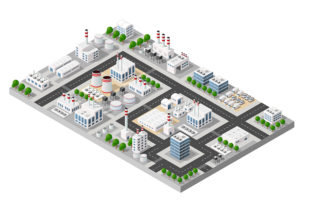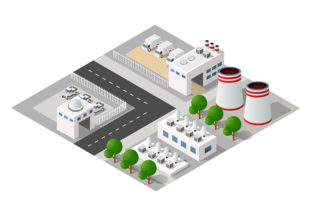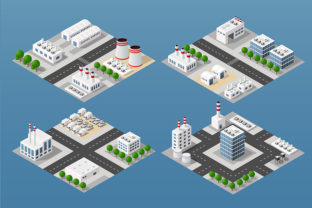
Set of Objects of Industrial Plants
Industrial plants aren’t just buildings—they’re ecosystems of interdependent components. The Set of Objects of Industrial Plants refers to the standardized collection of physical, functional, and representational elements used to model, design, operate, or teach about industrial facilities: reactors, conveyors, control panels, piping networks, HVAC units, safety systems, storage tanks, and more. These objects exist in blueprints, 3D modeling software, simulation tools, training modules, regulatory documentation, and even augmented reality overlays. They’re not abstract ideas—they’re measurable, placeable, configurable units that collectively define how a plant functions, scales, and adapts.
Why This Set Matters—Depending on Who You Are
What makes this set valuable isn’t its uniformity—it’s how differently it serves people with distinct goals, responsibilities, and constraints.
For Beginners Learning Industrial Systems
If you're new to engineering, technical education, or facility operations, the Set of Objects of Industrial Plants acts like vocabulary for a complex language. Each object—say, a centrifugal pump or a PLC cabinet—comes with defined inputs, outputs, failure modes, and integration logic. Beginners benefit most from sets that prioritize clarity over complexity: intuitive naming, consistent scale, built-in annotations, and compatibility with free or classroom-friendly tools like FreeCAD or Blender (with industrial add-ons). A well-structured set helps learners connect theory to visual and spatial reasoning—turning “heat exchanger” from a textbook term into something they can rotate, label, and position beside a steam line.
For Engineers and Plant Designers
Professionals rely on precision, interoperability, and compliance. Their version of the set must align with ISO 15926, IEC 62443, or P&ID standards—and export cleanly to AutoCAD, Navisworks, or Siemens Desigo. Here, priority shifts to metadata richness: material specs, pressure ratings, maintenance intervals, and digital twin readiness. A designer evaluating two object libraries won’t compare aesthetics—they’ll test whether a “control valve” object carries the correct tag ID schema, links to instrument data sheets, and updates automatically when upstream flow parameters change in simulation.
For Educators and Trainers
In vocational programs or corporate onboarding, the set becomes a teaching scaffold. An instructor might use simplified, color-coded versions of objects to demonstrate process flow—e.g., green pipes for feed, red for hazardous lines, yellow for utilities. Flexibility matters more than fidelity: being able to toggle labels, hide internal components, or swap out a real-world turbine model for an animated cutaway helps students grasp cause-and-effect relationships. One community college uses a lightweight set in Unity to let trainees “walk through” a virtual distillation unit—clicking valves to see pressure changes, opening hatches to inspect gaskets, all without risk or downtime.
For Small Business Owners and Facility Managers
Owners of food processing units, water treatment micro-plants, or regional manufacturing hubs often juggle budgets, regulatory audits, and aging infrastructure. For them, the value lies in objects that support practical decisions—not theoretical modeling. A “motor starter panel” object that includes common part numbers, compatible breakers, and NEC-compliant labeling saves hours during procurement or inspection prep. Some managers curate their own lean set: only the 40–60 objects they actually maintain, tagged with vendor contacts, last-replacement dates, and spare-part SKUs. It’s less about completeness, more about operational resonance.
For Creators and Technical Communicators
Bloggers documenting plant retrofits, YouTubers explaining refinery workflows, or publishers building interactive manuals need objects that render well across devices and support storytelling. That means clean topology (no hidden geometry), scalable textures, and optional detail levels—so a single “cooling tower” asset works in a thumbnail diagram, a high-res render, and a mobile AR preview. One freelance illustrator built a modular set where users can combine base structures (tower shell, fan deck) with interchangeable accessories (drift eliminators, basin heaters)—letting readers visualize configurations before committing to CAD time.
How to Choose What Fits Your Needs
Not every set serves every purpose. Ask yourself:
- What’s your primary output? Training videos? Regulatory submissions? Real-time monitoring dashboards? Each demands different object attributes—animation rigging vs. data fields vs. cybersecurity metadata.
- Where will these objects live? In Revit? A custom web app? Printed schematics? Compatibility isn’t optional—it’s foundational.
- Who interacts with them next? A maintenance tech scanning a QR code on a physical valve needs different info than a safety auditor reviewing digital twins.
- How much time can you invest in customization? Some sets ship ready-to-deploy; others require scripting to add logic or link to databases. Match effort to impact.
A hobbyist modeling a backyard biogas digester doesn’t need ASME-certified flange tolerances—but they do need clear visual distinction between anaerobic chamber, gas holder, and overflow pipe. Meanwhile, a pharmaceutical plant’s validation team may reject an otherwise excellent set if its “sterile filter” object lacks traceable calibration references or fails to generate audit-ready change logs.
Real-World Examples Across Contexts
Consider three actual uses:
- A renewable energy startup used a lightweight, open-license set of wind turbine nacelle objects to rapidly prototype layout options across five hillside sites—running shadow and noise simulations before hiring a full design firm.
- An online course on OSHA Process Safety Management embedded clickable object sets into browser-based scenarios: learners identified missing pressure relief valves in a virtual reactor setup, then received immediate feedback tied to 29 CFR 1910.119.
- A municipal wastewater utility mapped its entire pump station inventory using a GIS-integrated object set—each physical pump linked to its digital twin, maintenance history, energy consumption profile, and replacement cost forecast.
None of these teams used the same set—or even the same definition of “complete.” Their success came from matching object characteristics to human workflow—not chasing feature counts.
Final Thought: It’s About Fit, Not Features
The Set of Objects of Industrial Plants is never just a download. It’s a bridge between intention and implementation. Whether you’re sketching a first concept, certifying a safety system, teaching a class, or optimizing spare parts logistics—the right set reduces ambiguity, accelerates decisions, and quietly supports better outcomes. Start by naming your goal, not your tool. Then ask: does this set make that specific thing easier, safer, clearer, or faster? If yes, it’s worth your attention—even if it’s not the most detailed, expensive, or widely promoted option.