3D Gradient Geometric Shapes Design
Imagine opening a presentation slide, website hero section, or social media banner—and instantly holding attention not through motion or sound, but through depth, light, and intention. That’s the quiet power of 3d Gradient Geometric Shapes Design: a visual language where clean geometry meets dimensional color transitions to create clarity, hierarchy, and emotional resonance—all without animation or complex interactivity.
What It Is—And Why It Fits Real Work
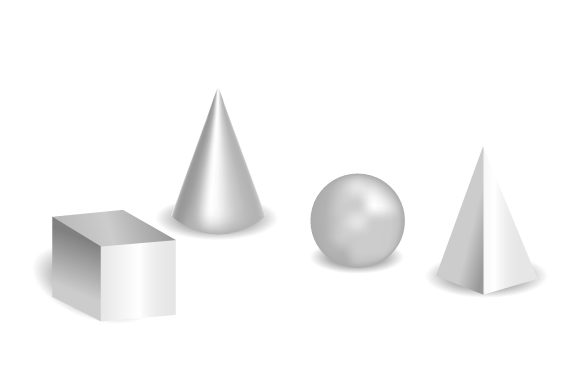
At its core, 3d Gradient Geometric Shapes Design combines three foundational elements: geometric forms (circles, hexagons, prisms, asymmetrical polygons), smooth multi-stop gradients (often shifting across hue, saturation, and luminance), and subtle 3D cues (soft shadows, directional highlights, layered perspective). Unlike flat design or skeuomorphism, it avoids literal realism while adding just enough spatial intelligence to guide the eye and imply function.
This isn’t decorative excess. It’s precision tuning for perception. Our brains process shape before color—and dimension before texture. When those layers align intentionally, viewers grasp structure faster, retain messaging longer, and feel more confident navigating interfaces or interpreting data visuals.
Stronger Visual Hierarchy—Without Extra Words
Consider a SaaS dashboard where users must quickly distinguish between status categories: active, pending, archived. A set of identical circles with only color differences often blurs under fatigue or color-vision variation. Now replace them with softly extruded hexagons—each with a unique gradient that shifts from cool-to-warm, light-to-dark, or matte-to-glossy. The shape signals category; the gradient direction implies priority; the 3D lift creates separation from the background.
Marketers use this in email headers to highlight CTA buttons—not by making them bigger, but by giving them gentle bevels and radial gradients that catch peripheral vision. Educators embed these shapes into infographics to group related concepts spatially, reducing cognitive load during remote learning. The benefit isn’t “more style”—it’s faster comprehension with less instruction.
Time Savings in Branding and Content Production
Small business owners and freelancers frequently juggle brand consistency across platforms: Canva templates, Notion dashboards, printed flyers, Instagram Stories. Reusing the same base shape library—say, a custom isometric triangle system paired with a fixed 4-color gradient palette—cuts hours of manual alignment and color matching.
One designer shared how switching from hand-drawn illustrations to a modular 3d Gradient Geometric Shapes Design system reduced her client onboarding visual assets timeline from 5 days to under 12 hours. She built reusable Figma components: a “data point” prism, a “timeline marker” cylinder, a “testimonial anchor” torus—each with editable gradient stops and depth sliders. Clients chose combinations, not individual pixels.
Creative Flexibility Within Constraints
Contrary to assumptions, this approach doesn’t limit creativity—it focuses it. Because geometry provides structure and gradients provide mood, decisions become about *intention*, not aesthetics alone. Should this section feel grounded or aspirational? Use low-contrast gradients with horizontal light direction (calm, stable) versus high-contrast vertical gradients (dynamic, rising).
Hobbyists building personal portfolios often start with abstract compositions—then realize how easily those same shapes translate into podcast cover art, workshop handouts, or even laser-cut wall decor. The same SVG file works at 24px and 2400px because geometry scales cleanly, and CSS or vector-based gradients remain crisp.
Who Benefits Most—and Where It Falls Short
3d Gradient Geometric Shapes Design serves creators who value both expressiveness and efficiency: educators designing accessible lesson slides, indie developers crafting landing pages, content marketers building scroll-stopping LinkedIn carousels, or product managers mapping user flows with intuitive visual metaphors.
It’s less ideal when absolute minimalism is required (e.g., regulatory documentation or ultra-low-bandwidth contexts), or when brand voice demands organic textures—watercolor, grain, ink bleed. In those cases, pairing one or two key gradient shapes with otherwise neutral layouts often strikes the right balance: enough distinction to direct attention, without overwhelming tone.
Also worth noting: accessibility matters. A 3D effect loses meaning if contrast falls below WCAG 4.5:1 between foreground shape and background. Test gradients with tools like Stark or axe DevTools—not just for color blindness, but for luminance difference. A soft purple-to-indigo gradient may look elegant, but if both stops are mid-tone, text overlaid becomes illegible on mobile screens.
Getting Started—Practical First Steps
You don’t need advanced 3D software. Start in tools you already use:
- Figma or Adobe Illustrator: Build base shapes, then apply gradient meshes or mesh gradients—not just linear/radial fills. Adjust opacity and blur on inner shadows to control perceived depth.
- CSS: Use
radial-gradient()withtransform: perspective()andbox-shadowfor lightweight web integration. Pair withclip-pathfor custom geometry. - Canva or Visme: Search “isometric shape” or “gradient polygon” templates, then replace default colors with your brand’s HSL values—not just HEX—to maintain gradient harmony.
Begin with one recurring element: a signature container shape for quotes, a consistent icon base for service cards, or a repeating border motif for newsletters. Consistency compounds impact. Over time, your audience starts recognizing your visual grammar—not because it’s flashy, but because it feels reliably clear.
A Note on Longevity and Adaptation
Trends fade. But spatial reasoning, perceptual grouping, and chromatic contrast are rooted in human cognition—not algorithm updates. That’s why 3d Gradient Geometric Shapes Design adapts well: change the gradient stops to match seasonal campaigns; rotate the light source to shift mood; swap a hexagon for a truncated octahedron to signal innovation—without overhauling your entire system.
One publisher reported that after standardizing their article feature graphics around a single family of gradient prisms, bounce rates on long-form pages dropped 18% over six months. Readers didn’t comment on “the shapes”—they commented on how “easy it was to find the next section.” That’s the real metric: not visual novelty, but navigational confidence.
Final Thought: Design as Quiet Infrastructure
Great 3d Gradient Geometric Shapes Design doesn’t shout. It supports. It separates. It reassures. Whether you’re explaining quantum computing to high schoolers or launching a local bakery’s first website, these shapes act as silent collaborators—organizing complexity, honoring attention spans, and leaving room for your message to land. Start small. Stay intentional. Let geometry hold the weight—so your words and ideas can breathe.