3D Layered Butterfly: A Distinctive Approach to Dimensional Art and Design
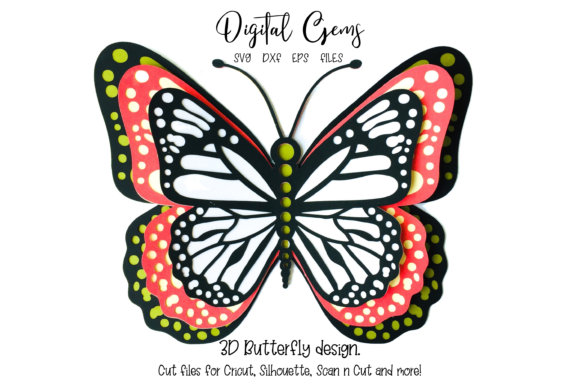
A 3D layered butterfly is a tactile, multi-tiered composition—typically crafted from paper, cardstock, acrylic, or thin wood—where individual wing segments are cut, shaped, and mounted at varying heights to create depth, shadow, and visual movement. Unlike flat illustrations or single-plane silhouettes, this format uses physical layering to simulate the delicate, overlapping structure of real butterfly wings. The result isn’t just decorative; it’s spatially responsive—shifting subtly with viewing angle and ambient light.
What Sets the 3D Layered Butterfly Apart
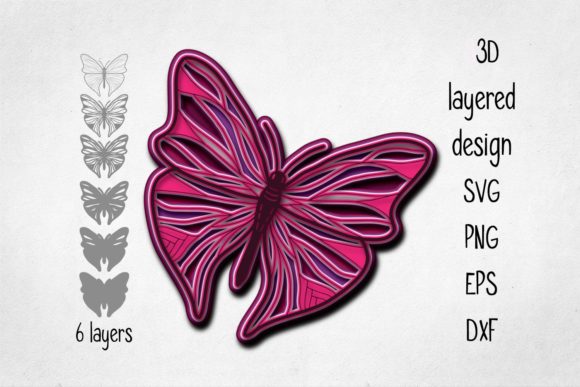
The defining trait is intentional stratification. Each layer represents a distinct anatomical or aesthetic zone: forewings, hindwings, body, antennae, and sometimes background elements like foliage or geometric accents. These layers are spaced using foam tape, acrylic spacers, or custom mounts—not glued flush. That spacing introduces parallax, soft shadows, and a sense of volume that printed or embossed alternatives can’t replicate without additional lighting or framing techniques.
This approach bridges craft and design thinking. It’s not purely illustrative (like vector art), nor purely sculptural (like wire or clay models). Instead, it occupies a middle ground where precision cutting meets dimensional planning—requiring attention to scale, layer order, material stiffness, and mounting stability.
How It Compares to Other Dimensional Formats
When evaluating options for wall art, educational tools, or personalized décor, the 3D layered butterfly sits among several related—but functionally distinct—approaches:
- Flat printed butterflies: High-resolution prints on canvas or metal offer color fidelity and scalability but lack physical presence. They’re cost-effective for large spaces but feel static up close.
- Embroidered or textile butterflies: Fabric-based versions add texture and softness, often used in fiber art or wearable pieces. However, they rarely achieve the crisp edge definition or consistent layer separation seen in precisely cut 3D layered butterfly designs.
- Resin-encased specimens: Real butterflies preserved in resin deliver biological authenticity and iridescence, but raise ethical and conservation concerns—and don’t allow for stylized reinterpretation or custom color palettes.
- Laser-cut silhouette wall art: Often mistaken for 3D layered butterfly work, these are typically single-layer outlines. While clean and modern, they omit the interplay of depth and occlusion that defines true layering.
The distinction matters most when context demands both visual impact and conceptual nuance—such as in therapeutic environments, science classrooms, or minimalist interiors where subtle complexity is valued over bold graphics.
Strengths and Practical Tradeoffs
One strength lies in adaptability. A 3D layered butterfly can be scaled from a 4-inch desktop accent to a 36-inch wall installation without losing structural integrity—provided layer thickness and spacing are proportionally adjusted. Materials also influence performance: paper offers affordability and ease of prototyping; acrylic adds durability and light-refracting clarity; sustainably sourced wood lends warmth and natural grain contrast.
But tradeoffs exist. Assembly time increases with layer count—especially when alignment must account for slight warping or adhesive bleed. Framing also becomes more involved: standard float frames may not accommodate deeper layer stacks, requiring custom-depth glazing or open-back shadow boxes. And while lighting enhances dimensionality, harsh directional light can cast distracting shadows or wash out subtle gradients between layers.
Color handling differs too. Since each layer is physically separate, color transitions aren’t blended digitally—they’re achieved through juxtaposition. A lavender forewing placed above a charcoal hindwing creates optical mixing at the overlap, rather than a smooth gradient. This makes the 3D layered butterfly especially effective for designers who value intentional color relationships over photographic realism.
Fitting the 3D Layered Butterfly Into Real Use Cases
In education, layered butterfly models help learners grasp symmetry, metamorphosis stages, and wing venation patterns more concretely than diagrams alone. Teachers report improved retention when students assemble kits themselves—engaging motor memory alongside visual learning. Here, the 3D layered butterfly serves as both artifact and activity tool.
In wellness and therapeutic settings—such as counseling offices or meditation spaces—the form supports grounding exercises. Observing how light shifts across layers invites slow, focused attention. Clients often describe the effect as “calmly dynamic”—more engaging than static imagery, yet less stimulating than video or motion graphics.
For personal expression, customization is straightforward: swapping out a single layer changes the entire mood. Replace a muted gray body with brushed copper foil, or add translucent vellum layers behind wings for diffused glow effects. This modularity makes the 3D layered butterfly suitable for evolving aesthetics—unlike fixed-media alternatives that lock in choices at purchase.
When Another Option May Be More Appropriate
Consider alternatives if your priority is portability or frequent reconfiguration. A 3D layered butterfly mounted in a deep frame weighs more and ships with greater fragility than a rolled canvas print or lightweight textile piece. For high-traffic commercial spaces—like hotel lobbies or retail corridors—durability testing becomes essential, especially where accidental contact is likely.
If photorealism or species-specific accuracy is critical—for example, in entomological outreach—the 3D layered butterfly may need supplementation. Its stylized nature emphasizes form and rhythm over microscopic fidelity. In those cases, pairing it with reference images, QR-linked field guides, or augmented reality overlays can bridge the gap without compromising its core strengths.
Budget constraints also shape suitability. Entry-level paper-based kits start affordably, but museum-grade acrylic or hand-finished wood versions reflect craftsmanship time and material costs. When comparing value, assess not just unit price but longevity, display flexibility, and how well it aligns with long-term environmental or aesthetic goals.
Making an Informed Choice
Choosing a 3D layered butterfly isn’t about selecting the “best” format—it’s about matching method to intention. Ask yourself:
- Do I need physical depth to support observation, interaction, or spatial reasoning?
- Is visual subtlety—rather than immediate impact—more valuable in this context?
- Will the piece remain in one location, or does it need to travel, rotate, or integrate into changing layouts?
- How important is material origin, repairability, or end-of-life recyclability?
There’s no universal answer. A classroom might benefit from durable, washable paper layers for student assembly, while a designer’s studio may prioritize archival acrylic with anti-UV coating. What remains consistent is the 3D layered butterfly’s capacity to invite closer looking—not because it shouts, but because it rewards patience with quiet detail.
Its value emerges not in isolation, but in conversation: with light, with surrounding space, with the viewer’s shifting perspective. That quiet reciprocity—between object and observer—is what makes the 3D layered butterfly a distinctive option worth considering, especially when depth, intention, and thoughtful variation matter more than speed or scale alone.