Play-Doh Lettering Duo: A Practical Evaluation for Parents and Educators
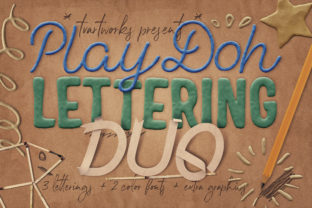
The Play-Doh Lettering Duo is a two-piece set designed to support early literacy development through tactile, hands-on play. It includes a reusable alphabet mat and a set of letter-shaped cutters—both made from durable, non-toxic materials compatible with standard Play-Doh compound. Unlike standalone letter toys or digital learning tools, this set integrates fine motor practice, sensory exploration, and foundational letter recognition into a single physical activity.
People often consider the Play-Doh Lettering Duo when seeking ways to reinforce pre-reading skills without screen time. It’s commonly evaluated by parents of children aged 3–6, early childhood educators, occupational therapists, and caregivers supporting children with diverse learning needs. Its appeal lies not in novelty, but in how it bridges developmental domains: shaping dough strengthens hand muscles needed for writing; pressing cutters builds spatial awareness; naming letters while playing supports phonemic awareness. These connections are grounded in established early childhood frameworks—not marketing claims.
One key benefit is its simplicity. There are no batteries, apps, or setup steps. Children can begin using it immediately after opening the box, and adults need no training to guide play. The mat features uppercase letters with corresponding picture cues (e.g., “A” with an apple), offering visual reinforcement without requiring reading fluency from the child. The cutters are sized for small hands and designed to release cleanly from dough, reducing frustration during repeated use. Because Play-Doh compound is reusable and widely available, replacement costs remain low over time—especially compared to consumable tracing pads or single-use worksheets.
However, practical tradeoffs exist. The set does not teach letter sounds, blending, or lowercase forms directly. While adults can extend the activity to include those concepts, the product itself offers no built-in scaffolding for progression beyond shape and name recognition. Also, the mat’s surface may retain faint impressions after repeated use, and some users report that very soft or overly dry Play-Doh doesn’t hold crisp letter shapes as well—meaning consistency depends partly on dough condition and adult supervision during preparation.
Another consideration is durability versus versatility. The cutters and mat are sturdy for typical home or classroom use, but they’re not intended for heavy daily rotation across large groups. In busy preschool settings, educators may find that individual sets wear more quickly than laminated flashcards or wooden letter tiles used in similar activities. Additionally, children who prefer highly structured instruction—or those who become easily overwhelmed by open-ended tasks—may engage more consistently with tools that offer clearer step-by-step guidance, such as magnetic letter boards with matching picture cards.
The Play-Doh Lettering Duo tends to be a strong fit in specific contexts. It works well for families already using Play-Doh regularly and looking to add educational purpose to existing play routines. It also suits children who respond positively to sensory input—those who learn more readily by touching, squishing, and manipulating materials. Homeschooling caregivers appreciate its portability and minimal storage footprint. Therapists sometimes incorporate it into sessions targeting bilateral coordination (using both hands to roll and press) or visual-motor integration, especially when paired with verbal prompts or sound repetition.
Conversely, alternatives may be worth prioritizing depending on goals. For example, if the primary objective is building phonics knowledge, a set of foam or wooden letters with accompanying sound cards provides more direct support for linking symbols to speech. If fine motor development is the main focus—and letter learning is secondary—tools like tweezers with pom-poms, pegboards, or lacing beads offer broader motor challenges without the cognitive load of symbol recognition. For children with sensitivities to texture, scented or highly pliable dough alternatives may be necessary, and the Play-Doh Lettering Duo doesn’t include those variations—it assumes standard compound compatibility.
Decision-making hinges less on whether the Play-Doh Lettering Duo is “good” and more on whether it aligns with current priorities. Ask: Is reinforcing letter names part of an active learning goal? Is hands-on, low-pressure practice preferred over drill-based methods? Is access to Play-Doh compound reliable and consistent? If the answers are yes, the set offers measurable utility. If the goal is rapid skill acquisition, standardized assessment prep, or accommodation for significant motor or sensory differences, supplemental or alternative resources will likely be needed regardless of purchase.
It’s also helpful to consider how the set fits within a broader literacy ecosystem. Research shows that children benefit most from varied exposures—seeing letters in books, hearing them in songs, tracing them on surfaces, and manipulating them physically. The Play-Doh Lettering Duo contributes one type of exposure. Its value increases when used alongside shared reading, verbal games (“What starts with /b/?”), and opportunities to write letters with pencils or chalk. Used in isolation, it won’t replace those other experiences—but used intentionally, it adds a meaningful dimension.
Cost is another pragmatic factor. At typical retail price points, the Play-Doh Lettering Duo falls within the mid-range for early learning tools—more expensive than basic letter flashcards, less costly than electronic learning tablets. Its longevity depends on care: storing cutters flat, avoiding extreme temperatures, and cleaning the mat with a damp cloth rather than submerging it. Over time, replacement cutters aren’t sold separately, so damage to a piece means either working around the loss or purchasing a new set.
Finally, expectations matter. This is not a tool that “teaches reading” autonomously. Progress depends on adult interaction—naming letters, modeling formation, asking questions (“Which letter looks like a snake?”), or connecting shapes to familiar words. Children won’t internalize letter-sound relationships simply by cutting and pressing. But for adults willing to engage alongside the child, it becomes a low-barrier entry point for conversation, repetition, and playful reinforcement—without pressure or performance metrics.
In summary, the Play-Doh Lettering Duo is best understood as a flexible, tactile component—not a standalone solution. Its strength lies in accessibility, compatibility with existing routines, and alignment with multisensory learning principles. Whether it belongs in your home or classroom depends on your child’s learning profile, your available time for interactive play, and how it complements other resources you already use. Evaluating it alongside those factors—not against idealized benchmarks—leads to more realistic and useful decisions.