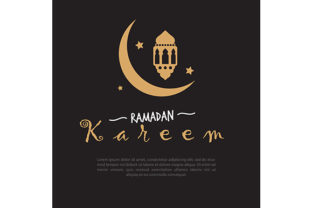
Ramadan Kareem Banner Typography
Typography isn’t just about picking a pretty font—it’s how meaning, respect, and intention are visually communicated. When designing a Ramadan Kareem banner, the choice of typeface carries cultural weight, emotional resonance, and functional clarity. Ramadan Kareem Banner Typography refers to the thoughtful selection, arrangement, and styling of Arabic and/or bilingual (Arabic–English) text used in digital or print banners celebrating Ramadan—whether for social media posts, mosque announcements, e-commerce promotions, classroom displays, or community events.
Why It Matters—Across Different Lived Experiences
A graphic designer in Dubai may prioritize elegant Naskh-based Arabic fonts that render cleanly across devices, while a schoolteacher in Chicago might need bold, legible bilingual banners for students with varying Arabic literacy levels. A small halal bakery owner in Toronto could rely on quick-to-edit Canva templates with built-in Ramadan Kareem Banner Typography, whereas a freelance illustrator in Cairo may hand-draw custom lettering to reflect regional calligraphic traditions. The same term means different things depending on who’s using it—and why.
For Beginners: Clarity Over Complexity
If you’re new to design—or even to Ramadan-themed visuals—start simple. Focus on readability first: choose Arabic fonts with clear diacritics (harakat), generous spacing, and consistent stroke contrast. Avoid overly decorative scripts unless you’re confident they’ll stay legible at smaller sizes. Many free Google Fonts like Amiri, Tajawal, or Cairo support Arabic and work reliably in tools like Canva, PowerPoint, or Adobe Express. Try pairing one Arabic font with a clean sans-serif English counterpart (e.g., Cairo + Inter)—no need for matching styles, just visual harmony.
For Educators & Community Organizers
In classrooms, mosques, or youth programs, typography supports inclusion. Consider accessibility: high-contrast color combinations (dark text on light background), minimum 24pt size for printed banners, and fonts that distinguish similar-looking Arabic letters (like س vs. ش). Bilingual banners should balance both languages—not just in translation, but in visual hierarchy. For example, if your audience is mostly English-dominant, place English first—but keep Arabic prominent enough to affirm identity and linguistic dignity. A banner for a school Iftar event might use El Messiri for Arabic (designed for screen reading) and Open Sans for English, with equal font weights and aligned baselines.
For Small Business Owners & Marketers
Your banner isn’t just decoration—it’s part of a customer’s first impression. A café launching a “Ramadan Specials” Instagram carousel needs typography that feels warm and inviting, not stiff or corporate. That might mean soft curves in the Arabic script (Changa or Almarai), paired with a friendly English sans-serif. Avoid fonts that look generic or overused—especially those bundled with default design tools without Arabic language support. Test how your banner looks on mobile: does the Arabic text wrap cleanly? Does the phrase “Ramadan Kareem” remain centered and unbroken across devices? If you’re running paid ads, faster-loading banners with system-safe fonts often outperform heavy, custom-webfont versions.
For Creators & Freelancers
You likely juggle multiple clients—from nonprofits to boutique brands—each with distinct brand voices. One client may want traditional Thuluth-inspired elegance; another may prefer modern, minimalist Arabic typography with geometric precision. Knowing which fonts support OpenType features (like contextual alternates or ligatures) helps maintain authenticity. Tools like Font Squirrel’s Arabic font finder or the Google Fonts Arabic subset let you preview and filter by language support, license, and style. When delivering files, always embed fonts or provide fallbacks—and clarify usage rights, especially if sourcing from independent foundries like Nomad Type or Typotheque.
For Hobbyists & Faith-Based Volunteers
You don’t need professional software to make something meaningful. Free platforms like Canva offer pre-sized Ramadan templates with editable Arabic text—but check whether the font scales properly when you change the wording. Some templates lock Arabic into fixed-width boxes, causing awkward compression or overflow. If you’re printing banners for a local masjid fundraiser, test-print a corner first: does the Arabic align left-to-right as expected? Does the English translation appear below—not beside—the Arabic, respecting common bilingual reading flow? Prioritize consistency over novelty: using the same trusted font across all your annual Ramadan materials builds quiet recognition and trust.
What to Evaluate—Before You Choose
Not every font labeled “Arabic” works well for banners. Ask yourself:
- Legibility at scale? Will it hold up on a 6-foot-wide printed banner *and* a 400-pixel Instagram Story?
- Language coverage? Does it include full Unicode Arabic blocks—including Eastern Arabic numerals, Persian glyphs, or Urdu-specific characters—if needed?
- Licensing clarity? Is it free for commercial use? Does it allow modification (e.g., adjusting letter spacing for tighter banners)?
- Cultural resonance? Does the style match your intent—reverent, joyful, communal, scholarly—without leaning into cliché?
- Technical reliability? Does it render consistently across browsers, email clients, and older Android devices?
A student designing a poster for an interfaith iftar might value ease of use and speed most. A branding agency crafting a national Ramadan campaign will weigh typographic nuance, scalability, and legal compliance more heavily. Neither approach is “better”—they’re just calibrated to different real-world constraints.
When It Fits—And When It Doesn’t
Ramadan Kareem Banner Typography shines when your goal is respectful, effective visual communication—not when you’re aiming for experimental art or rapid A/B testing of messaging alone. If your project centers storytelling, ritual, or community belonging, thoughtful typography deepens impact. But if you’re prototyping a last-minute social post and only need basic legibility, a tested, widely supported font beats chasing trend-driven aesthetics.
It’s also not a substitute for translation accuracy, cultural consultation, or inclusive design beyond type. A beautifully rendered “Ramadan Kareem” means little if the rest of your banner uses inaccessible colors or excludes non-Arabic speakers entirely.
Ultimately, Ramadan Kareem Banner Typography is about honoring the occasion through attention to detail—where every curve, space, and alignment reflects care. Whether you’re uploading your first Canva edit or refining a multi-language brand system, the right type choices quietly say: *This matters. You matter.*